
Deck Railing Options Compared: Wood, Composite, Aluminum, and Cable
Railing is the part of a deck everyone underestimates. It can be a quarter of the project budget, it is the first thing your eye lands on from the yard, and it is the piece your hand touches every time you climb the stairs. Boards get all the attention, but railing decides how the deck looks and how much work it demands from you.
The options have multiplied far beyond pressure treated pickets. Here is how the main railing families compare for homes around Winchester, from budget to view preserving premium.
What Are the Best Deck Railing Options?
The best deck railing for most Winchester homes is powder coated aluminum, which pairs slim, view friendly balusters with essentially zero maintenance at a mid range price. Wood costs the least upfront but needs regular staining, composite railing matches modern decking with little upkeep, and cable or glass systems maximize views at the highest cost.
There is no single winner, only the right match for your budget, your view, and your appetite for maintenance. The comparison below sorts it quickly.
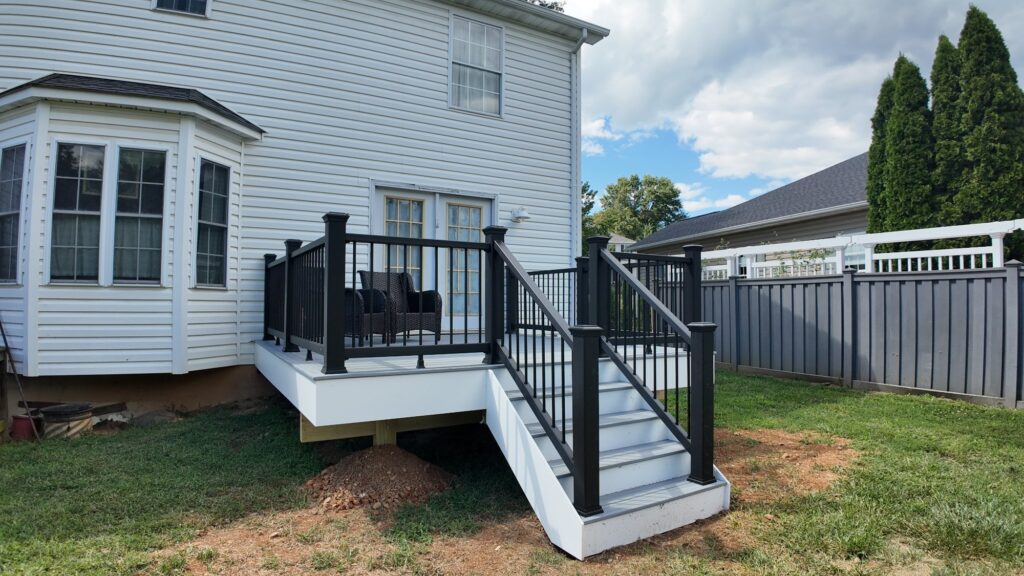
Wood Railing: Lowest Price, Most Upkeep
Pressure treated wood railing remains the least expensive option and the easiest to customize on site, which is why builders have defaulted to it for decades. Cedar steps the look up with tighter grain and natural rot resistance. If the budget is tight or the house calls for painted classic pickets, wood still makes sense.
Just price the ownership honestly. Railings weather harder than deck boards because water hits every face of every picket, so plan on cleaning and restaining every 2 to 3 years, plus tightening as posts and rails move with the seasons. Skip a few cycles and the railing announces it to the whole backyard. Wood is cheap to buy and expensive to babysit.
Composite and Vinyl: Match the Deck, Skip the Sanding
Composite railing wraps the same technology as composite decking around a rail profile: wood look finish, no staining, decades of warranty. It coordinates beautifully with composite boards from the same manufacturer, which gives the whole deck a designed, unified look. Vinyl railing plays a similar low maintenance game at a lower price, usually in clean white, and suits farmhouse and colonial styles around Frederick County.
The tradeoffs are visual weight and cost. Composite and vinyl profiles run thicker than metal, so they frame the view rather than disappear into it, and quality composite railing can cost as much as aluminum. Cheap vinyl can also yellow and get brittle over the years, so brand quality matters more in this family than most. Choose composite or vinyl when you want the deck and railing to read as one continuous material story.
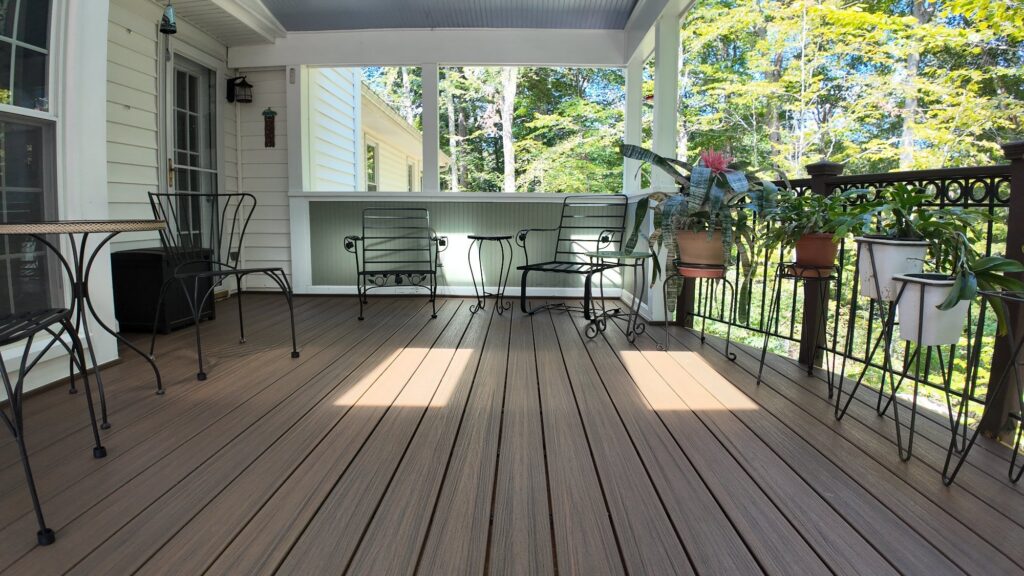
Aluminum, Steel, and Cable: Thin Profiles, Big Views
Powder coated aluminum has become the default upgrade on Valley decks for good reason. The balusters are slim, the finish shrugs off weather for decades, snow shovels do not faze it, and it never asks for stain. Mixed systems, composite or wood posts with aluminum balusters between them, deliver most of the view benefit at a friendlier price.
Cable railing takes openness further, stretching stainless steel cables so tight the railing nearly vanishes, a favorite for decks that look out over the Blue Ridge or across open farmland. Glass panels go all the way to invisible, at the cost of regular cleaning and the highest price per foot. If you bought the lot for the view, this tier is where your railing money belongs.
The Code Rules Every Railing Must Meet
Whatever material you choose, code is not optional. Any Winchester or Frederick County deck surface more than 30 inches above grade requires a guardrail at least 36 inches tall, openings tight enough that a 4 inch sphere cannot pass through, and construction that withstands a 200 pound load at the top rail. Stairs with four or more risers also need a graspable handrail, which decorative top rails alone often do not satisfy.
These rules exist because railings are life safety equipment that happens to be pretty. Cable systems in particular must be tensioned and spaced correctly to pass the sphere test, and site built wood railings live or die on their post connections. A builder who talks about hardware and blocking before he talks about style is the one you want.
Bottom Line
Wood wins on price, composite wins on coordination, aluminum wins the all around crown, and cable or glass wins the view. Every one of them has to hit the same safety codes, so build quality matters as much as material. Stoneridge Decks & Outdoor Living installs every railing family on this list across Winchester and Frederick County and can bring samples to your deck so you can see each one against your actual view.
Related reading: our deck builder hopewell services, Deck Lighting Design That Makes Evenings the Best Part, Under Deck Drainage Turns Wasted Space Into a Dry Outdoor Room


