
Which Deck Materials Hold Up Best Through Virginia Winters
Winchester winters are not brutal by northern standards, but they are sneaky. The Shenandoah Valley swings above and below freezing dozens of times between December and March, and that constant back and forth is harder on a deck than steady cold ever would be.
If you are planning a new deck or replacing one that did not survive its last decade gracefully, material choice is the decision that matters most. Here is how the main options actually perform through Winchester winters, ranked by how they handle moisture, movement, and time.
What Deck Material Holds Up Best Through Winchester Winters?
Composite and PVC decking hold up best through Winchester winters because they absorb almost no water, which makes them nearly immune to the freeze thaw damage that cracks and splinters wood. Pressure treated lumber remains a solid budget choice, but it needs regular sealing to get through Virginia’s wet winters without checking, cupping, and popped fasteners.
The key insight is that cold itself is not the enemy. Moisture is. A dry January is easy on any deck. It is the rain, snow melt, and refreeze cycle that pulls boards apart one season at a time.
Why Freeze Thaw Cycles Punish Decks
Water expands roughly 9 percent when it freezes. When moisture soaks into wood grain and then freezes overnight, it pries the fibers apart from the inside, and every thaw lets new water settle a little deeper into the damage. Multiply that by the 40 or more freeze thaw swings a typical Winchester winter delivers and you get the checking, splinters, and loose railings that show up by spring.
The same physics work underground, which is why footings matter as much as boards. Frost heave can lift a poorly set footing and rack the whole frame. Any deck built in Frederick County or the City of Winchester should have footings poured below local frost depth and inspected before framing begins, and that is one corner no builder should ever cut.
Composite Decking: Built for This Climate
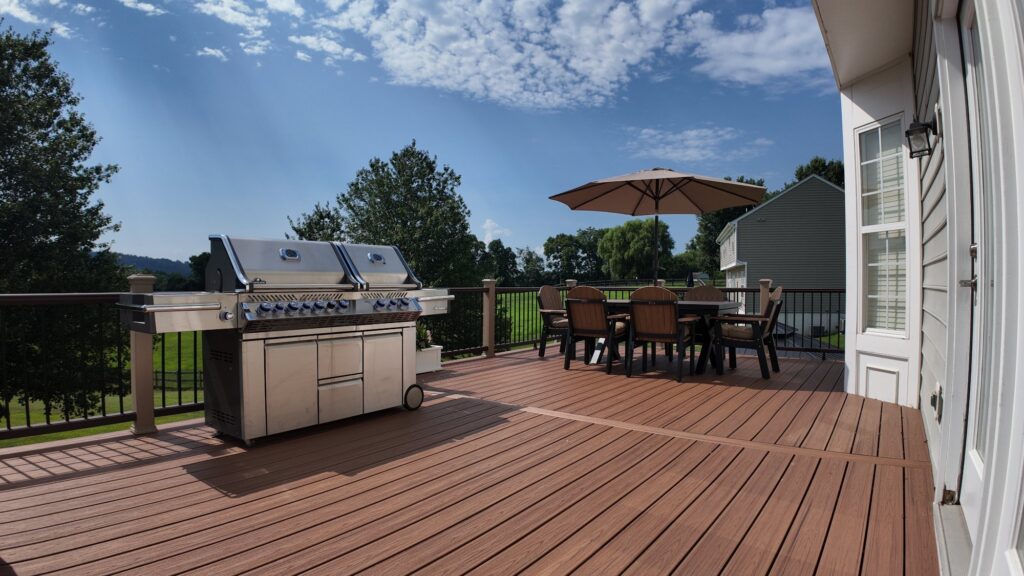
Composite boards wrap wood fibers in a plastic shell, so water has nowhere to soak in. No absorbed moisture means no freeze thaw cracking, no rot, and no annual sealing ritual. Winter maintenance drops to sweeping off snow and giving it a wash in spring, and leading composite lines now carry fade and stain warranties running 25 to 50 years.
There is also a point of local pride here: Trex, the company that invented composite decking, is headquartered right in Winchester. The material that handles Valley winters best is engineered a few miles from the decks it lives on. Expect composite to run roughly 40 to 60 percent more than pressure treated wood upfront, a gap that narrows every year you skip staining and sealing.
PVC and Aluminum: The Premium Tier
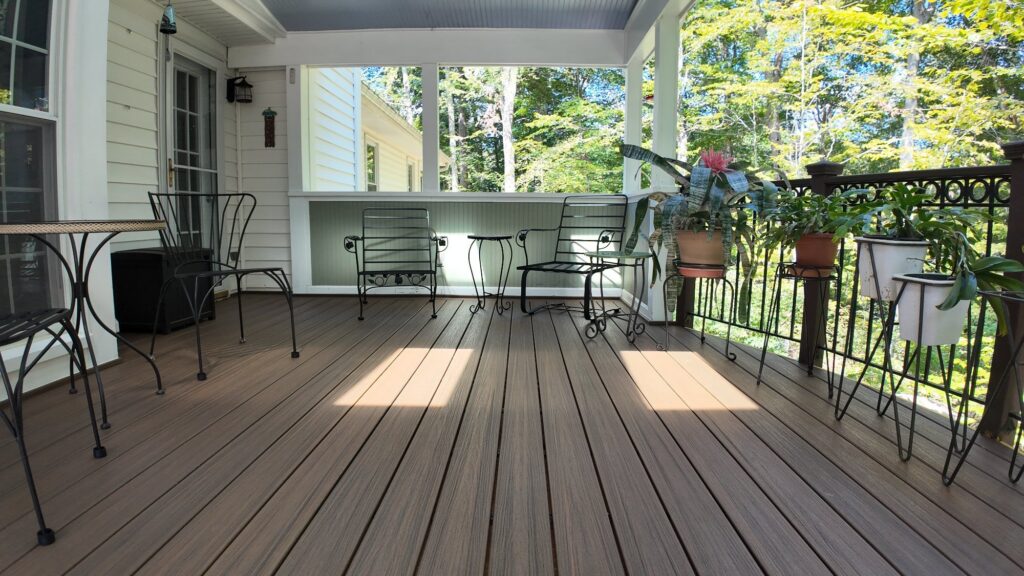
PVC decking takes the moisture logic to its endpoint. With no wood content at all, the boards are fully synthetic, so they shrug off water, mold, and mildew even on shaded, damp lots where composite can show mildew film on the surface. PVC is also lighter and stays more colorfast than most materials, which is why it shows up on premium builds and covered porches around Winchester.
Aluminum belongs in the conversation for railings and select decking situations. It never rots, never feeds mold, and handles snow shoveling without a scratch. Powder coated aluminum railing paired with composite or PVC boards has become the standard combination for homeowners who want to be done with maintenance for good.
Pressure Treated and Cedar: What to Expect
Pressure treated southern yellow pine is still the most common decking in the Valley, and for the money it is hard to argue with. The treatment protects against rot and insects, but it does nothing to stop moisture movement, so boards cup, twist, and check as they dry. Plan on cleaning and resealing every 2 to 3 years, and expect to replace individual boards over the deck’s life.
Cedar splits the difference with natural rot resistance and a warmth wood lovers will not give up. It still demands the same sealing schedule and dents more easily than pine. One more note that applies to every deck: even under composite boards, the frame is pressure treated lumber, so details like joist flashing tape and quality hardware decide how long the whole structure lasts, whatever you walk on.
Bottom Line
For Winchester winters, composite and PVC lead the pack, pressure treated pine works if you commit to sealing it, and the frame details underneath matter no matter what you choose. Buy the best boards your budget allows and protect the structure below them. If you want to compare samples side by side and see real numbers for your project, Stoneridge Decks & Outdoor Living builds decks across Winchester and Frederick County that are made for exactly this climate.
Related reading: our deck builder hopewell services, Outdoor Living Trends for Winchester VA Backyards, How to Maintain Your Deck Through Every Season


